Why the Tap Is the First Skill Worth Learning
Most people who walk into their first class already know that tapping out in jiu-jitsu ends a round. What they don’t know yet is how early to do it, how to make sure a partner notices, or how strange it feels to concede on purpose when every instinct says to keep fighting. That gap is where many avoidable beginner injuries, and a lot of early frustration, come from.
This article treats the tap as a skill in its own right: what it signals, when it should happen, and how to make it unmistakable. Whether you are considering classes at Gracie Barra Chula Vista or have already started rolling, these habits apply the same way on any mat.
DISCOVER Gracie Barra Chula Vista
CLICK HEREWhat a Tap Actually Communicates
A tap is not a score or a verdict on your ability. It is a signal that says: you have caught me in a position I can’t safely get out of, please let go. Your partner releases, you both reset, and the round continues or starts over. Nothing else is decided.
The hard part is emotional, not technical. New students often treat each tap as a small public failure and try to wait it out, hoping strength or flexibility will rescue them. That reflex is common enough to appear on lists of habits new white belts bring to the mat, right beside muscling through techniques and forgetting to breathe.
A more useful way to see it: every tap is information. If you get caught by the same armlock three times in a week, you have found exactly what to ask about next. Students who tap freely spend their time learning from those moments instead of recovering from them.
When to Tap in BJJ, and Why Earlier Is Better
The standard advice is to tap early, but early compared to what? The useful reference point is not pain. It is the moment you realize you no longer have a realistic way out.
Tap When the Escape Is Gone, Not When It Hurts
Waiting for pain is a poor signal because pain can arrive late. A joint lock applied quickly, or by someone much heavier, can move from uncomfortable to harmful in a fraction of a second. By the time it truly hurts, the choice may already have been made for you.
In practice, tap once the lock or choke is clearly set and your defenses are spent: your arm is straightening and you can’t turn into it, or the choke is tight and your hands are no longer protecting your neck. Beginners are better off tapping a little too soon than a little too late. If you are unsure where that line sits in a particular position, ask your instructor at Gracie Barra Chula Vista to show you the exact moment the defense runs out.
Defense Comes Before the Tap, Not Instead of It
Tapping early does not mean tapping at the first sign of an attack. There is a window where defending is the right call: hiding an arm, framing, turning, protecting the neck before the grip is locked. Studying defensive frames and submission escapes widens that window, so you spend less time in spots where the tap is your only option.
The difference is timing. Defend while the attack is still forming; tap once it has arrived. Wriggling out of an arm that is already fully extended is how preventable injuries happen.
How to Tap So There Is No Doubt
A tap only works if your partner notices it. The clearest version is a firm, repeated tap with an open hand on your partner’s body, where they will feel it. Tapping the mat works too, but it is easier to miss in a tangle of arms and legs.
The Verbal Tap
When your hands are trapped, or you doubt your partner felt your hand, say “tap” out loud, clearly and more than once if needed. In training, a verbal tap ends the exchange just as a physical one does. Some students hesitate because it feels dramatic. It isn’t; it is simply the fastest way to stop.
Tapping is also a two-way agreement. When you are the one attacking, let go completely the moment you feel or hear a tap, not after one more squeeze to make a point. Partners who release instantly are the ones everyone wants to train with, and that trust is a large part of how training partners learn to communicate during rolling.
Building a Tap-Early Habit in Your First Months
Habits form fastest when the stakes are low. If you are new, tell your partner before a round so they can match your pace, and tap during drilling whenever someone applies a technique harder than the exercise calls for. Tapping in that calm setting builds the reflex before live sparring tests it. Knowing what a typical beginner class looks like, from warm-up to rolling also helps you anticipate when the live part arrives.
After each tap, ask a short question: “What did I miss there?” Most partners are glad to show you the moment the position turned. Over a few weeks, those answers add up to a map of your own recurring mistakes, which is worth far more than surviving a few extra seconds.
What a Healthy Round Looks Like When Both Partners Tap Freely
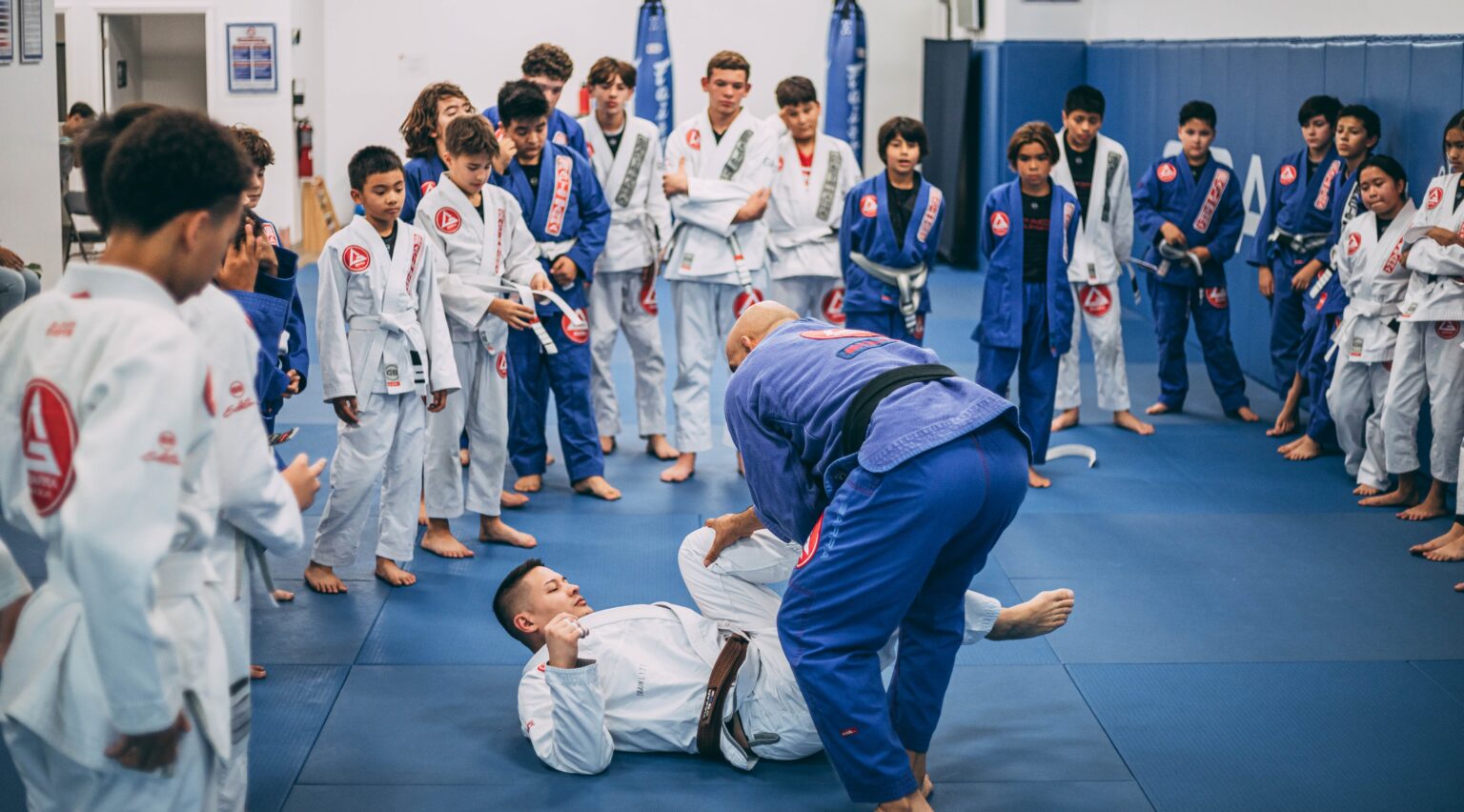
Picture a hypothetical five-minute round between two newer students. One gets caught in a choke early, taps clearly, and they restart. A minute later the roles flip with an armlock. Neither is hurt, both tried their techniques at a realistic pace, and each leaves with one specific question for the instructor. That is a productive round, even though both “lost” at some point.
Children and teens often feel a tap more sharply than adults do, so parents can help by treating it as a normal part of practice rather than something to fix. The same attitude helps young athletes lose a tournament match without losing confidence, and it starts in ordinary training rounds.
DISCOVER Gracie Barra Chula Vista
CLICK HERETapping Out in Jiu-Jitsu Is What Keeps You Training
So is tapping out in jiu-jitsu a sign of weakness? No. It is the mechanism that makes live practice possible, letting two people test real techniques against resistance and both walk away ready for the next class. Tap when the escape is gone, tap so your partner can’t miss it, and release the instant your partner does the same.
If your first classes are coming up, say the word “tap” out loud once or twice beforehand; it sounds odd at home, but it removes the hesitation later. When a specific position keeps catching you, bring that exact situation to an instructor at Gracie Barra Chula Vista.