

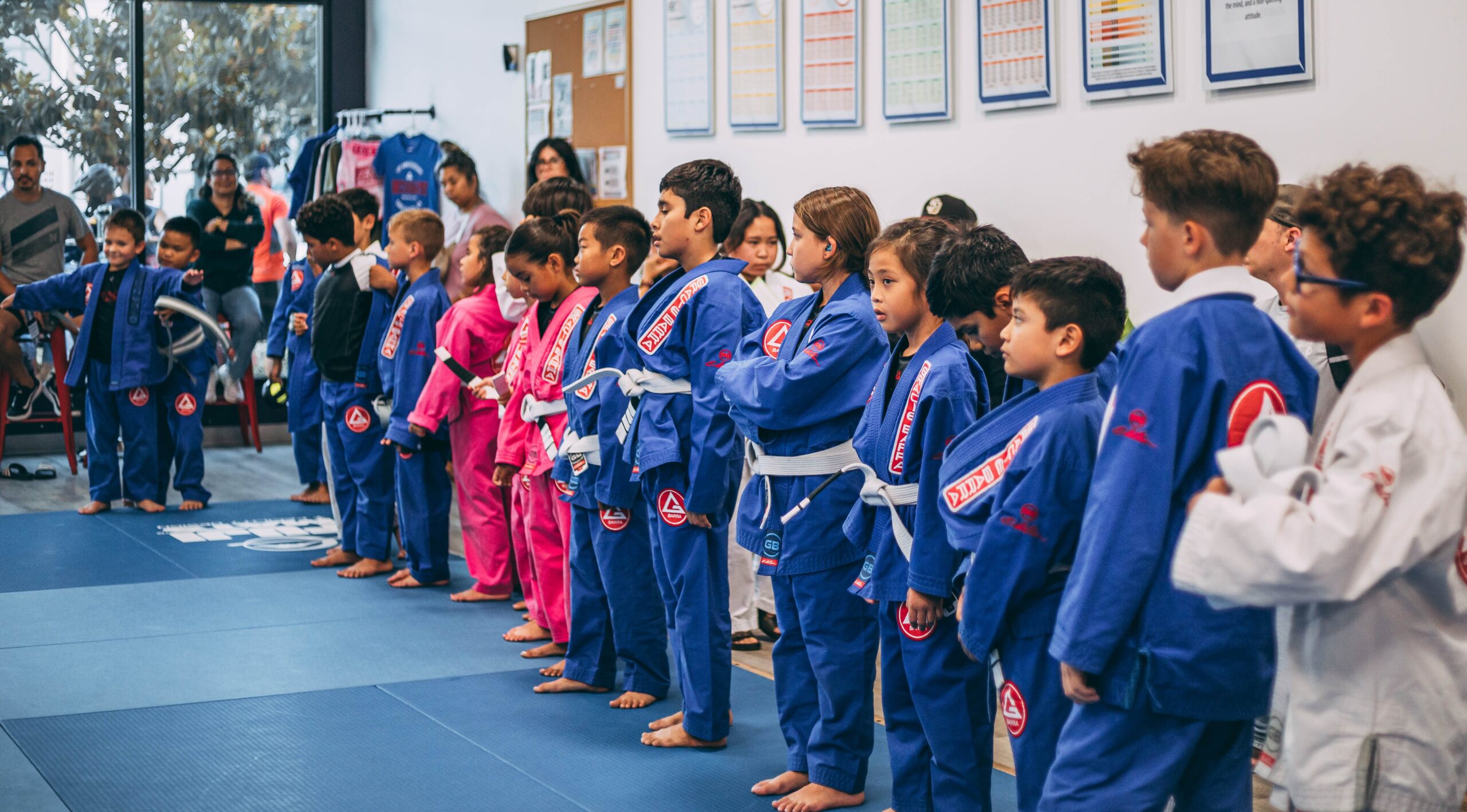
Should Your Child Step Onto a Tournament Mat?
Many parents start thinking about a kids jiu-jitsu competition after their child has trained for a while and a classmate brings home a medal. The short answer is that competing can teach things regular classes rarely do, as long as the child wants to try it and the event fits their level. It is not required to progress in jiu-jitsu, and plenty of kids train for years without entering a bracket.
This guide looks at what actually changes when a child competes, which benefits are realistic, how youth rules are organized, and how to prepare for the day. It is written for parents in the Gracie Barra Chula Vista community and anyone else weighing that first registration form.
DISCOVER Gracie Barra Chula Vista
CLICK HEREWhat Changes When Training Turns Into a Match
In class, a child usually rolls with partners they know. They have felt that partner’s weight before, the room is familiar, and the instructor can pause the round to fix a detail. A tournament removes most of that. The opponent is a stranger, a referee runs the match, a clock counts down, and people are watching from the sides.
That shift is the whole point. The everyday advantages covered in our guide to the benefits of jiu-jitsu for kids are built slowly in a predictable setting. Competition tests those same skills when the setting is no longer predictable. A child who holds a position calmly in class finds out whether they can still do it with their heart racing.
Some kids find that test exciting from the start. Others need more time on the mat before it feels like a challenge instead of a threat. Neither reaction says much about talent; it mostly reflects how familiar live rounds already feel.
The Benefits of Competing Go Beyond the Medal
Medals are the visible part, but most of the benefits of competing show up in how a child handles pressure and disappointment. Two of them tend to surprise parents.
Learning to Function While Nervous
Almost every child feels nervous before a match, including kids who are loud and confident at home. Competing teaches them that nerves are normal and that they can still move, breathe, and follow a simple plan while feeling them. That lesson sticks better than being told not to worry.
Adult competitors go through the same process, and the ideas in our article on preparing for a jiu-jitsu tournament and managing pre-match anxiety apply to kids in a simpler form. For a seven-year-old, a useful goal might be “get the first grip” rather than “win.”
Losing a Match Without Losing Confidence
Brackets guarantee that most children will lose at some point, often in their first event. Losing a match in front of others stings, and that is exactly why it is useful. A child learns that a loss is information about what to train next, not a verdict on who they are.
This mirrors how jiu-jitsu already treats mistakes, where tapping is part of learning. Our piece on how jiu-jitsu helps kids build self-confidence explores that idea further. For families at Gracie Barra Chula Vista, the most productive talk after a loss often happens at the next class, when the match can become something specific to practice.
How Youth Rules Keep the Match Age-Appropriate
Parents often worry that a tournament means facing a much bigger or more experienced opponent. Established youth events are organized to reduce that risk. At IBJJF events, for example, kids and juveniles register in the age division tied to their birth year and choose a weight class, according to the federation’s first championship guide.
Technique rules also narrow for younger competitors. The IBJJF publishes its rule book along with a technical fouls and illegal moves reference, and other organizations use their own versions. Read the specific event’s rules before registering, since what is legal can change from one tournament to another.
Belt rank matters too. Youth belts such as grey, yellow, orange, and green, explained in our guide to the jiu-jitsu belt progression system, help place children with similar experience in the same bracket.
Preparing for a First Jiu-Jitsu Tournament
The clearest sign of readiness is that the child asks to compete, or says yes with real interest when the idea comes up. Other good signs: they are comfortable in live rounds, they tap and respect a tap without hesitation, and they can stay in a bad position without panicking. If the push comes mostly from adults, waiting a few months is usually the better call.
Talk with your child’s instructor before signing up. They see how your child reacts to pressure in class and can suggest an event and division that make sense. In the weeks before, keep training normal instead of adding sessions out of anxiety.
The day itself is long for kids, with plenty of waiting between weigh-in and matches. Pack water and familiar snacks, and protect sleep the night before. Our article on nutrition and hydration for young jiu-jitsu athletes covers the basics, and they apply on competition day as well. This is not the day to try a new food.

What to Say Before and After the Match
What a child remembers about a first tournament often depends as much on the adults around them as on the result. Before the match, keep it short: remind them of the one thing they practiced and that you are proud they signed up. Leave technical instructions to the coach, because two voices shouting from the side only confuse a child.
Afterward, ask before you assess. “What did you try?” or “What felt hard?” opens a real conversation, while “Why didn’t you pass?” tends to close it. Specific praise also lands better: “You kept fighting for the grip when you were tired” means more than “good job.” If frustration lingers for days, our article on patience and handling frustration in jiu-jitsu offers a helpful perspective for parents.
DISCOVER Gracie Barra Chula Vista
CLICK HEREIs a Kids Jiu-Jitsu Competition Worth It for Your Child?
For most children who want to try it, a kids jiu-jitsu competition is worth it, less for what they win and more for what they learn about pressure, preparation, and getting back up after a setback. It works best as an occasional test of training rather than the reason to train.
If your child is curious, start with a short conversation with their instructor about readiness and a suitable first event. Families training at Gracie Barra Chula Vista can bring that question to the mat at their next class, then let the child’s own interest set the pace.