
The Customs Nobody Explains Before Your First Class
Most beginners walk into a jiu-jitsu class worried about technique, but the questions that make them nervous are usually smaller: Do I bow? Where do my shoes go? Can I say no to a roll? Jiu-jitsu etiquette is the set of habits that answers those questions. It exists to keep training partners safe and to let a full room learn without getting in each other’s way.
Some customs are close to universal, while others change from one academy to the next. This guide covers the habits you can count on almost anywhere, plus how to pick up the local ones quickly, whether you are thinking about a trial class at Gracie Barra Chula Vista or already have a few sessions behind you.

DISCOVER Gracie Barra Chula Vista
CLICK HEREHygiene Is the First Rule of BJJ Mat Etiquette
Jiu-jitsu is a contact sport practiced on a shared surface. Everyone spends an hour pressed against other people and the same mat, so jiu-jitsu hygiene is about more than politeness. It is the part of BJJ mat etiquette that protects everyone else’s health.
In practice, it comes down to a short routine. Wash your gi and rash guard after every session, because a damp uniform left in a bag will smell by the next class. Keep fingernails and toenails trimmed short, since long nails scratch partners during grip fights. If you are still putting your kit together, this overview of what to wear and bring to your first classes explains the gi, rash guard, and mouthguard.
Footwear, Cuts, and Skin Problems
Shoes stay off the mat, and bare feet stay off the bathroom floor. Wearing sandals or slides between the locker room and the edge of the mat keeps whatever is on the floor from ending up where people train with their faces down.
Open skin needs the same care. The CDC’s MRSA prevention guidance for athletes recommends covering cuts until they heal and not sharing towels or uniforms. If a rash or sore can’t be covered, or you’re unsure what it is, sit that class out and check with a doctor before coming back. One missed class costs far less than passing something to half the room.
Rolling Etiquette: How to Spar Without Becoming a Problem Partner
Live sparring, usually called rolling, is where most etiquette questions come up, because it is the moment two people decide together how hard to go. Good rolling etiquette is less about memorizing rules than about paying attention to the person in front of you.
Asking, Declining, and Matching Intensity
Starting a roll is simple: walk up, ask “Want to roll?”, then slap hands and bump fists. Declining is just as normal: if you are tired or need a break, a polite “I’ll sit this one out” is enough.
Once you start, adjust to your partner instead of treating every round as a fight. A newer student, or someone returning after months away, needs a different pace than a teammate preparing for a tournament. Going hard against someone who is clearly working at half speed is one of the habits instructors notice fastest, along with muscling through positions instead of relying on technique.
Respecting the Tap and the Space Around You
When your partner taps, let go immediately. When you tap, make it clear and unmistakable. This guide on when to tap and how to make your tap obvious covers the timing in detail, because both sides of that exchange run on trust.
Watch the space around you as well. Several pairs usually roll at once, so if you drift toward another pair, the partner on top should pause and steer back toward open mat. A quick stop and a “my bad” covers most collisions.
Class Customs Around Time, Rank, and Instruction
Away from sparring, the first habit is showing up on time, because the warm-up and first technique set the plan for the session. If you are running late, many academies ask that you wait at the edge of the mat until the instructor waves you in rather than jumping straight into a drill.
Rank shapes a few habits too. Belts and stripes signal experience, and understanding how the jiu-jitsu belt and stripe system works helps explain why newer students are often paired with someone further along during drills. Rank is a guide to who can help you learn, not a reason to treat anyone differently.
Listening is the custom beginners underestimate most. When the instructor is demonstrating, stop drilling and watch, and save side conversations for later. At Gracie Barra Chula Vista, as anywhere else, if a detail of the technique didn’t land, asking the instructor directly will help you more than guessing with a partner.
How to Learn an Academy’s Own Jiu-Jitsu Etiquette
General rules get you most of the way, but every school has its own details. Some bow when stepping on or off the mat, some line up by rank at the start and end of class, and some are more relaxed about both. Instead of guessing, watch what experienced students do during the first few minutes and follow their lead.
If something still isn’t obvious, ask. Questions such as “Where should I leave my water bottle?” or “Do we line up before class?” are completely normal, and an upper belt or the front desk can usually answer them in a sentence.
What Good Etiquette Looks Like in Your First Weeks
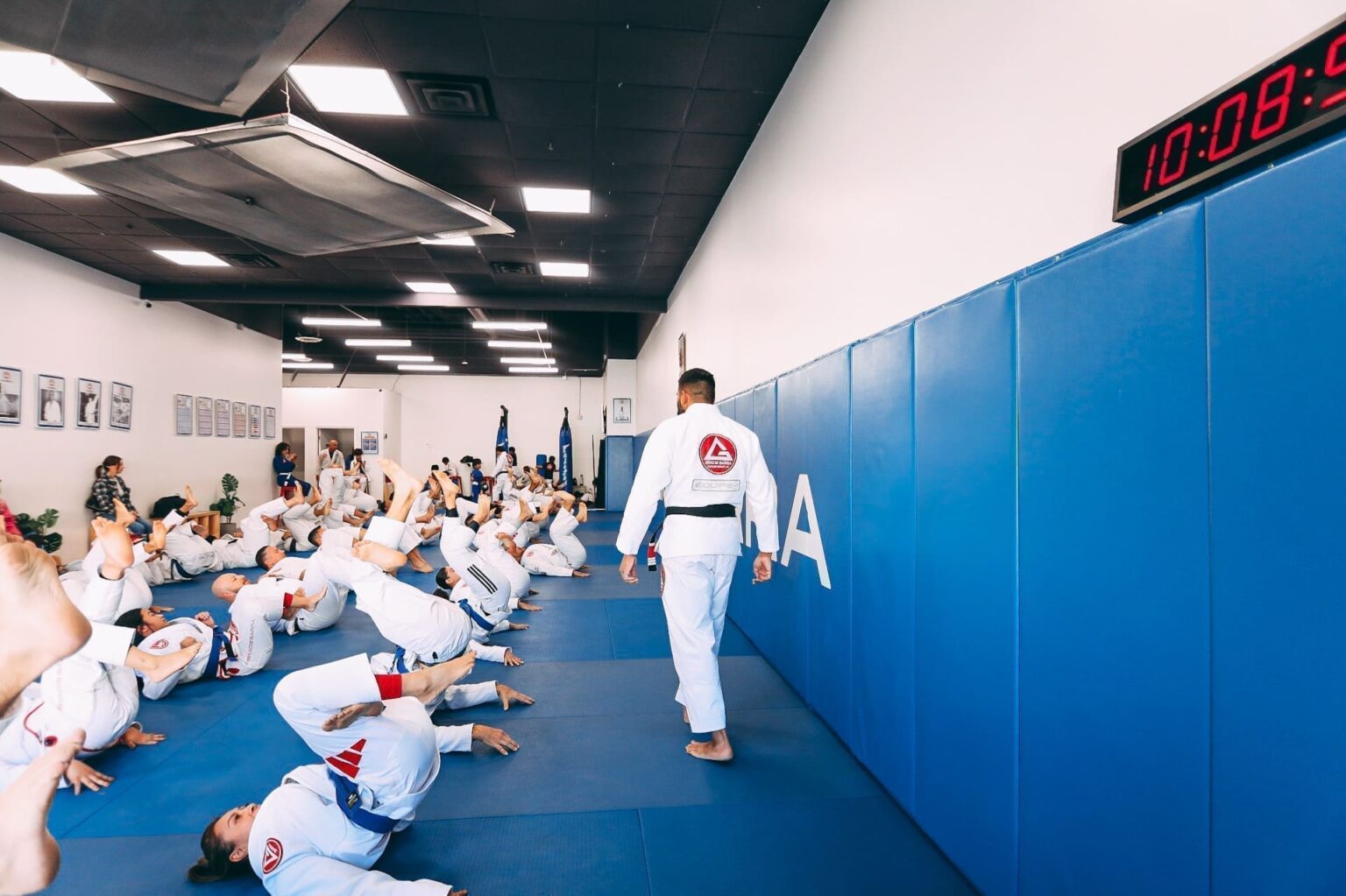
Picture a typical first week. You arrive ten minutes early with a clean gi, trimmed nails, and sandals. During drilling, you let your partner finish their repetitions before taking your turn. When someone asks you to roll, you say yes, keep the pace steady, and let go the instant they tap. None of that requires technical skill, and all of it makes you an easy partner to train with.
Most of this comes down to awareness of the other person, which is also a big part of reading and communicating with your training partners during a roll. The technique will take months and years to build. The etiquette can be solid within a few classes.
DISCOVER Gracie Barra Chula Vista
CLICK HEREGood Manners on the Mat Come Down to Trust
The short answer is that jiu-jitsu etiquette is less a rulebook than a set of shared agreements: stay clean, protect your partner, respect the tap, and follow the flow of the class. Once you understand why each habit exists, the customs stop feeling like tests and start feeling like common sense.
If you are getting ready for your first class at Gracie Barra Chula Vista, the most useful next step is a simple one: pack a clean uniform and sandals, trim your nails, and arrive a few minutes early so you can watch how the room works before training begins.